Saelher
Cloth Sample · Atelier Journal
Finished champagne satin bridesmaid gown developed by Saelher
Cloth Sample · Bridesmaid Dress Development

The Making
of a Dress

From the first sketch to a luminous satin gown—a study in drape, proportion, and precise sample development.

The Saelher Process

A dress does not begin with the first stitch. It begins with an idea: a silhouette, a tactile impression, and the way the wearer should feel when stepping into it.

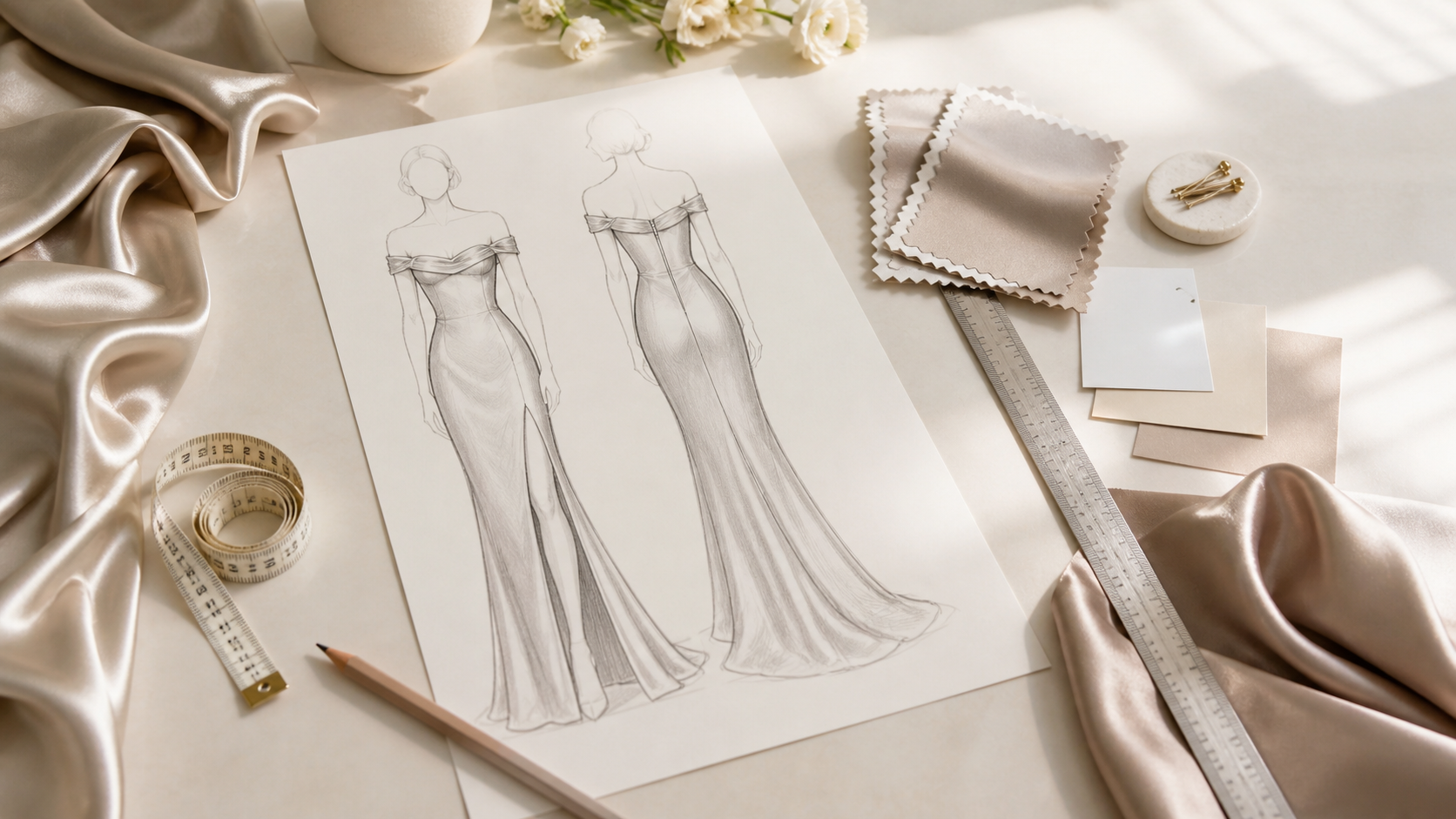
Saelher dress sketch with black-and-ivory tweed swatches and color cards
Chapter 01 · Inspiration

Define the Mood Before Drawing the Silhouette

Design begins with a balance of proportion, texture, and occasion.

The sketch is the garment’s first language. We begin by defining how the dress should feel: polished without becoming overly formal, shaped at the waist while remaining natural in motion.

Champagne-gray satin brings a fluid sheen and an elegant bridal mood. The off-shoulder drape, waist placement, floor length, and slit position are considered at this stage—because refinement is often decided in millimetres.
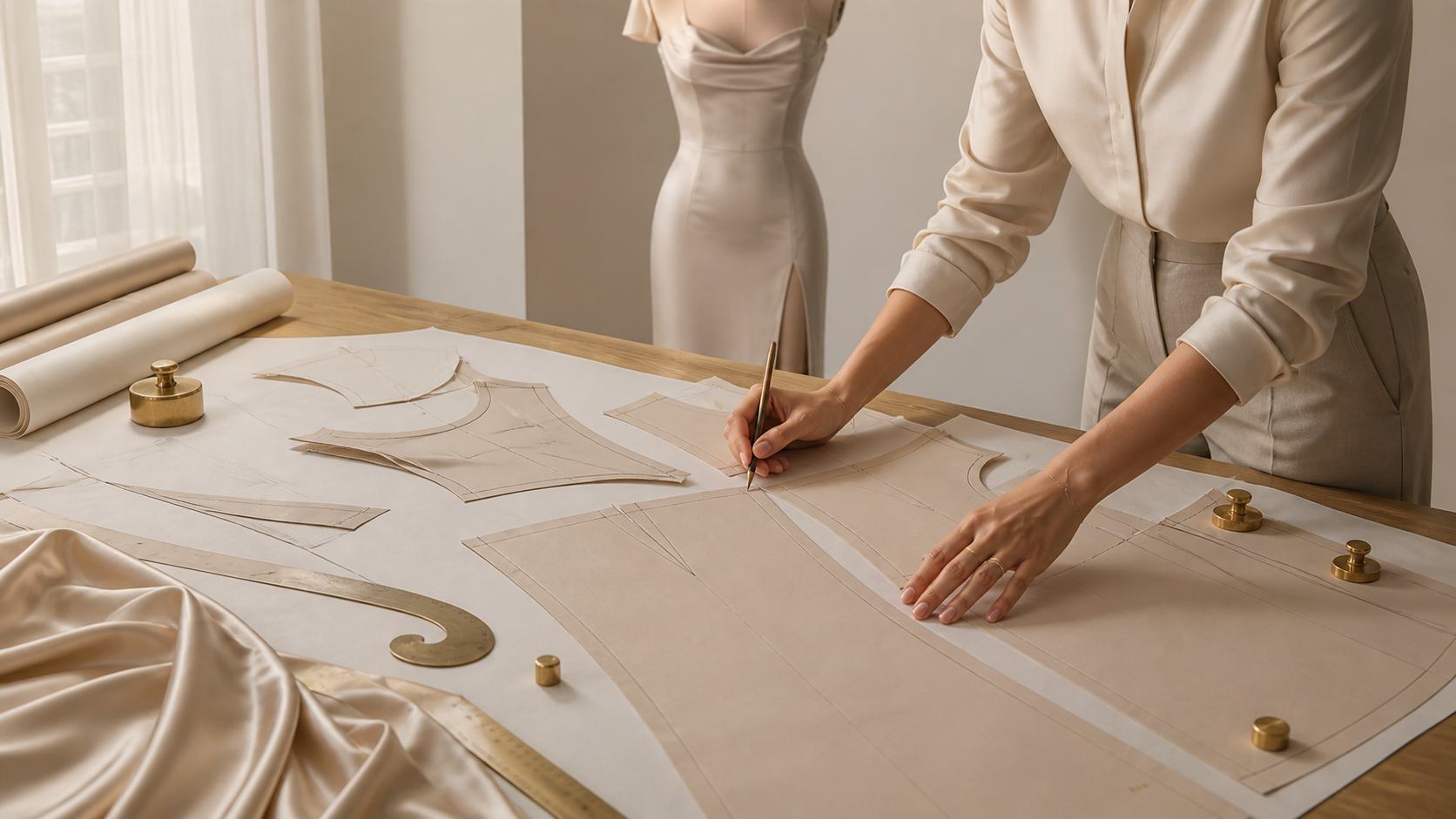
Pattern maker checking the fitted-waist dress pattern at a worktable
Chapter 02 · Pattern Development

Turning Flat Lines into Structure

The pattern defines how the garment meets the body—and how the body moves within it.

Moving from sketch to pattern is an act of structural translation. Visual proportions become shoulder lines, darts, side seams, waist shaping, and the curve of the skirt, with carefully measured ease for movement.

With a fitted-waist dress, a narrow appearance alone is not enough. The waist must work with the bust-to-waist ratio, the fit across the back, and the comfort required when sitting.

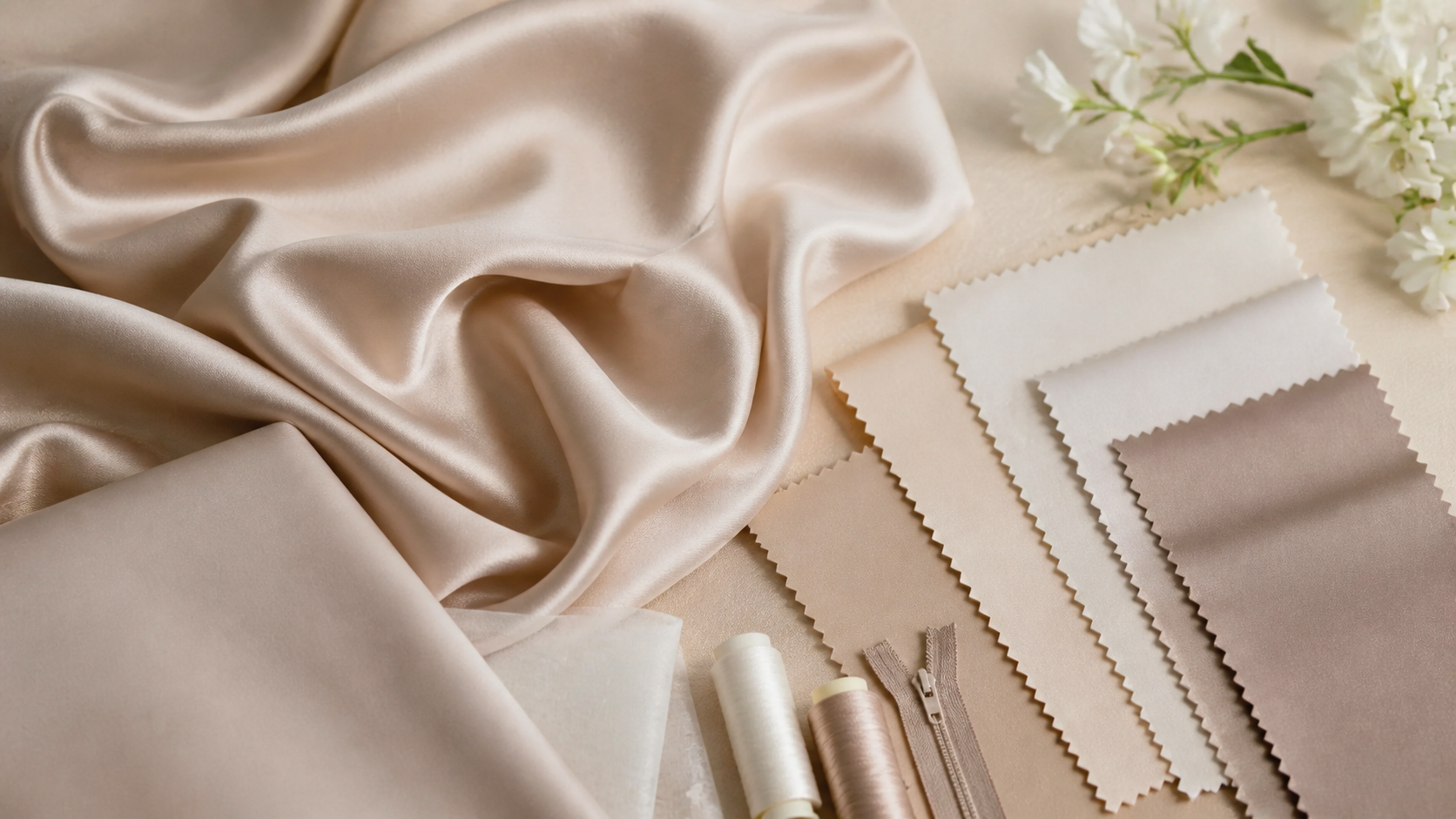
Champagne-gray silk satin, matching lining, zipper, and dressmaking trims
Chapter 03 · Fabric

Texture Sets the Tone

Fabric is not selected after the design; it is part of the design itself.

The same sketch can take on an entirely different character in another cloth. Satin must be assessed for weight, sheen, recovery, opacity, and bias drape. Too rigid, and the skirt loses movement; too light, and the surface may reveal every internal seam.

Main cloth, lining, lightweight interfacing, concealed zip, and thread are reviewed as one system. These quiet choices determine how cleanly the gown falls and how refined it feels.

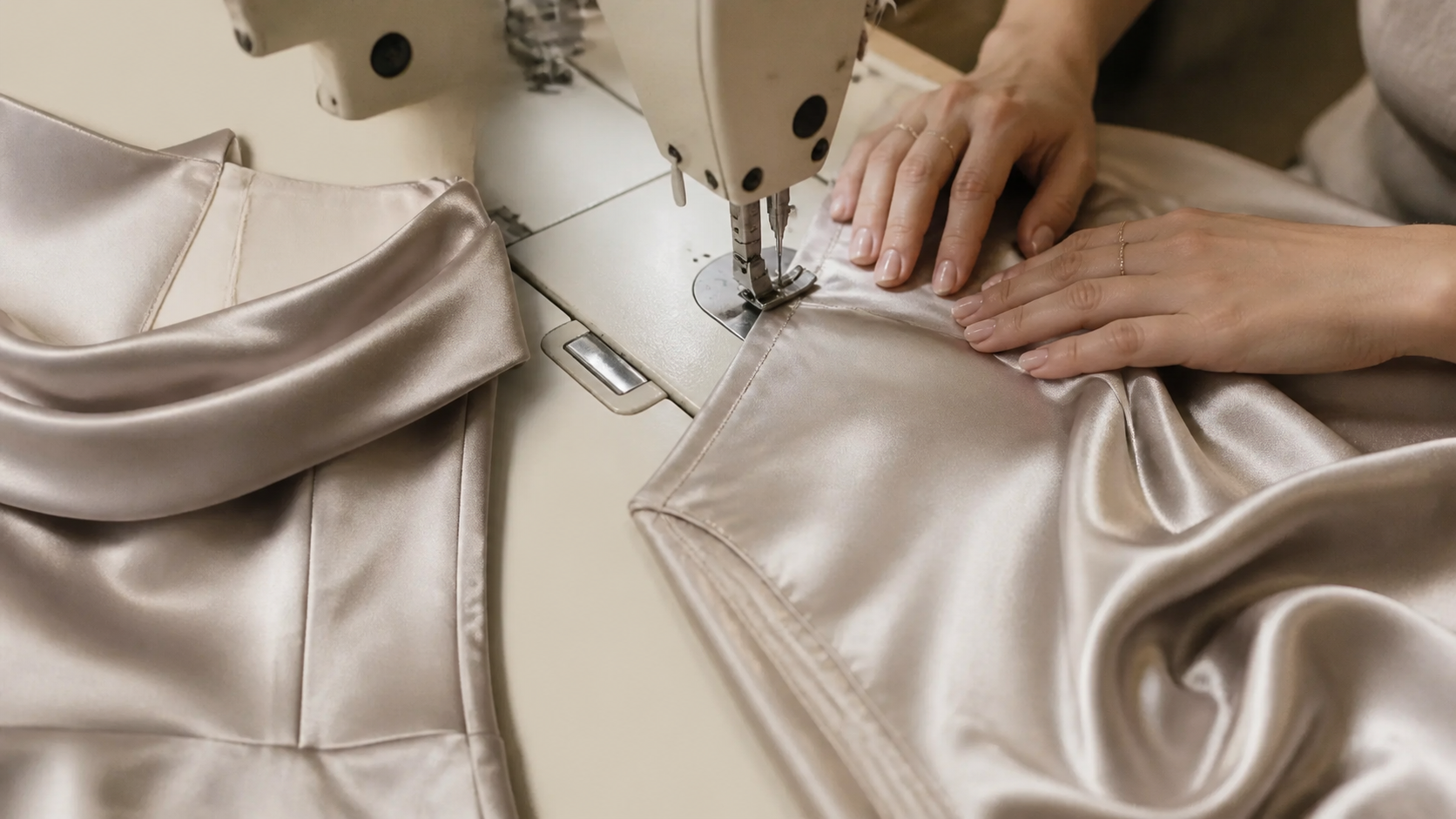
Dressmaker sewing a fine seam in champagne silk satin
Chapter 04 · Craft

Details That Reward a Closer Look

Fine craftsmanship does not demand attention; it reveals itself through touch and wear.

Before cutting, the satin is rested, laid out, and checked for grain and surface direction. Bias-cut panels require particular care so the skirt hangs smoothly without twisting or stretching unevenly.

The draped neckline, fine seams, concealed zip, lining, slit reinforcement, and internal support are resolved one by one. Structure is added only where it serves the bodice; elsewhere, the gown remains fluid.

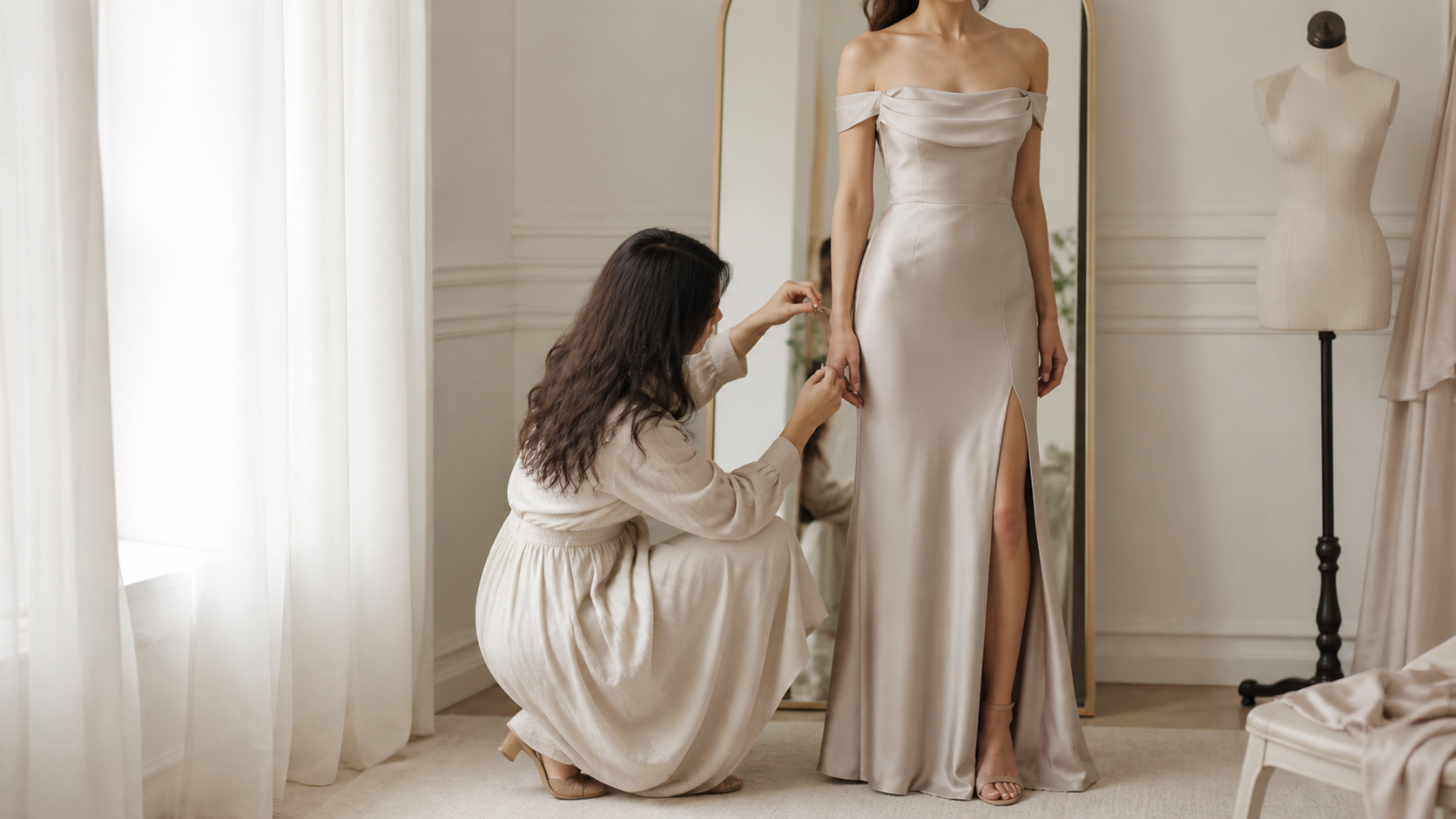
Pattern maker adjusting the waist and hem during a dress sample fitting
Chapter 05 · Fitting

When the Sample Meets the Body

A fitting is the beginning of understanding the design again.

Measurements on paper become true proportions only when the sample is placed on the body. We observe whether the shoulders settle naturally, the neckline lies cleanly, the waist sits correctly, and the skirt moves smoothly.

Every adjustment needs a reason. Through marking, opening, correcting, and fitting again, the sample moves closer to the original idea—and becomes more precise than the original idea could be.

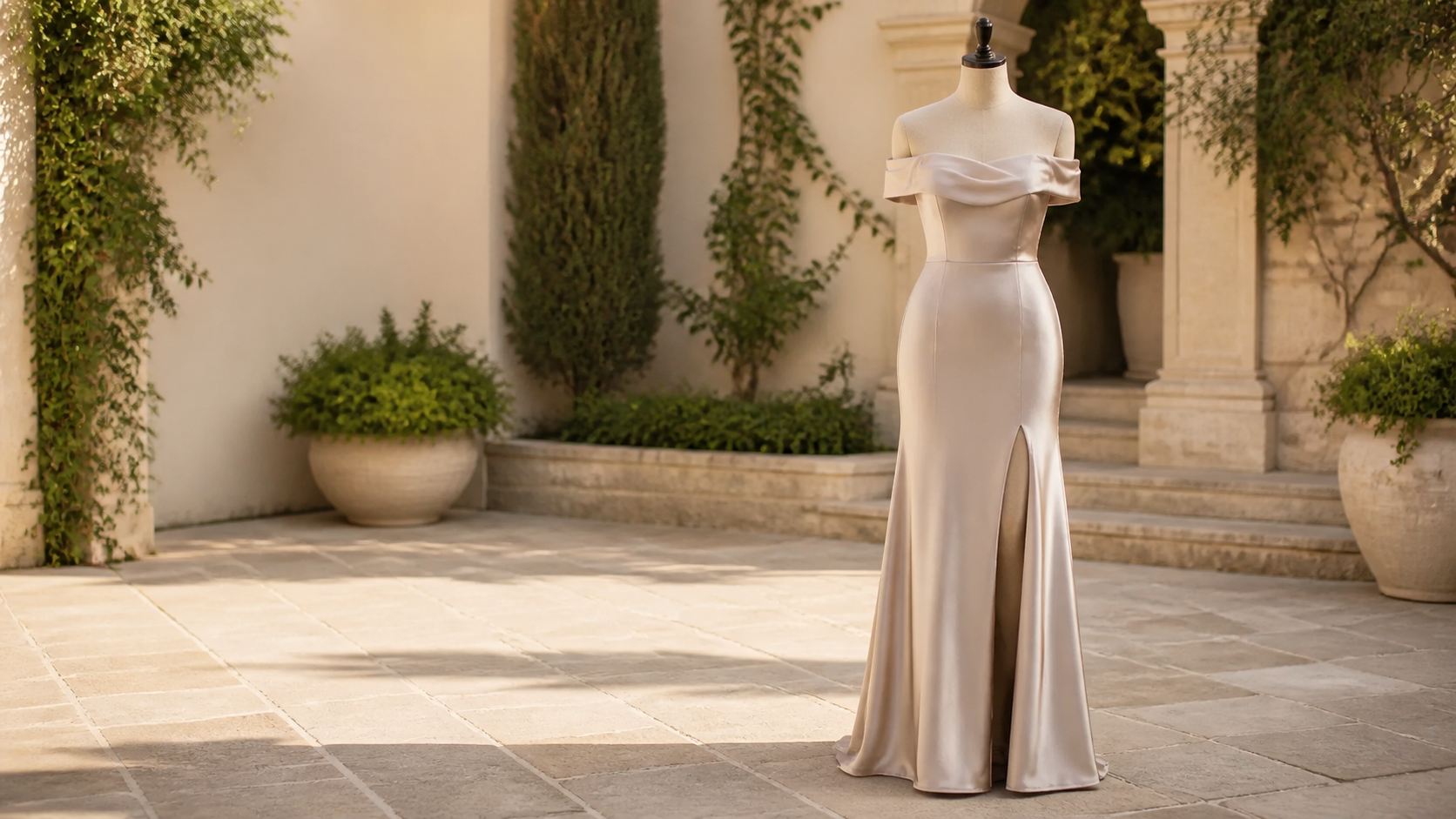
Finished champagne satin off-shoulder bridesmaid gown by Saelher
Chapter 06 · The Finished Dress

A Design Finds Its Own Presence

When silhouette, fabric, and craft support one another, the finished garment becomes more than a sketch.

The completed gown retains the sculpted waist and draped neckline of the original drawing while gaining the soft luminosity unique to satin. The bias-cut skirt responds to movement while preserving a long, elegant line.

This is what a successful sample achieves: not merely reproducing a drawing, but preserving its tone, proportions, and intended experience.

Development Timeline

A Clear Path from Sample to Production

Each stage is planned around fit approval, material confirmation, and consistent workmanship.

15

Days · Sample Development

Pattern development, fabric confirmation, first sample construction, fitting review, and final sample adjustments.

25

Days · Bulk Production

Material preparation, cutting, sewing, in-line inspection, final quality control, pressing, and packing.

Lead times begin after design, materials, quantities, and sample approval are confirmed. Complex styles or special materials may require additional time.

About Saelher

From an Idea to a Sample You Can See, Touch, and Wear

Saelher works with fashion brands, independent designers, and e-commerce entrepreneurs across design communication, pattern development, fabric and trim coordination, sample making, and the transition into production.

Is it faithful
to the design?
Does it work
in real wear?
Can it move reliably
into production?

If you have a sketch, reference images, or an early product idea, share it with us. Let the first sample begin the conversation.

Start Your Clothing Sample